Kaveri Trail Marathon: what the half is actually like
Varun Gopal
India's oldest trail marathon, run along the Kaveri backwaters at Ranganathittu. The course, the heat, how to get to a 5am start line from Bangalore, and an eight-week build from 10k to the half.
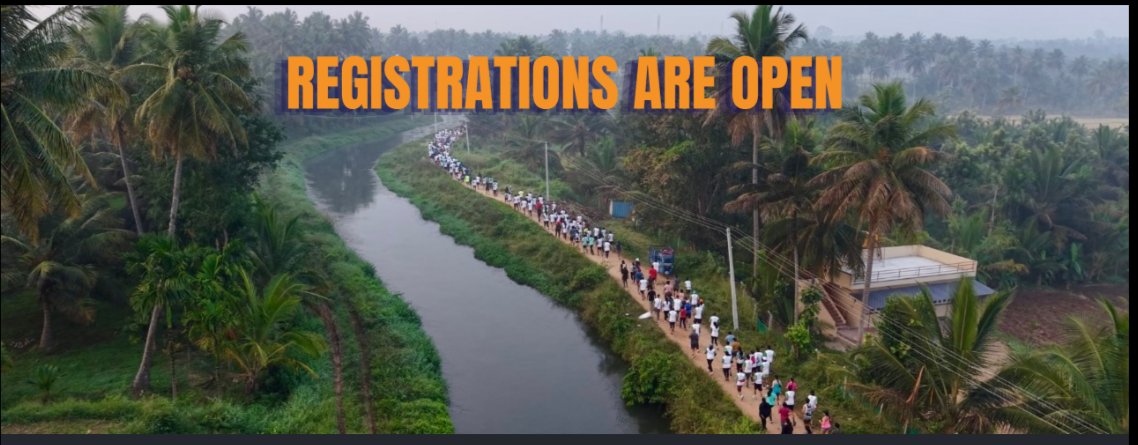
The Kaveri Trail Marathon is the oldest trail marathon in India, run along the backwaters of the Kaveri at Ranganathittu Bird Sanctuary near Mysore. It's a common first half marathon for Bangalore runners, and it's further from home and hotter than most people plan for.
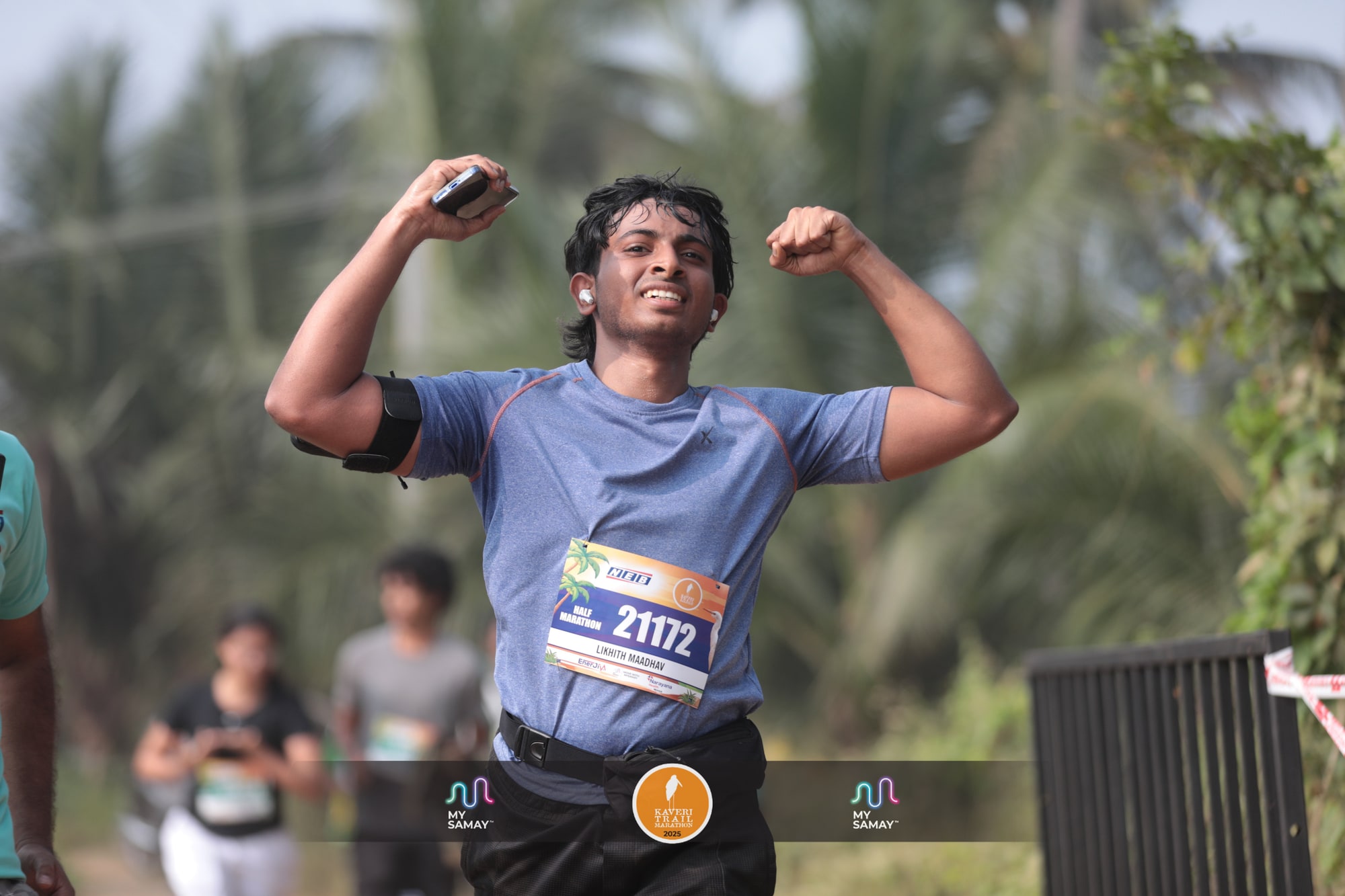
This is what the course actually asks of you, how to solve the 5am start line from Bangalore, and the eight-week build that took me from a 10k to finishing it in 2:35:27.
The course
The half is an out-and-back: 10k out, then the same 10k back. The full marathon is that loop twice.
Route
21.6 km
Two things that matter more than the distance:
It's flat. My watch recorded 13 metres of elevation across the whole 21.57 km. If you've been training on Bangalore's rolling roads, nothing here will climb — which sounds like a gift and mostly is, but it also means no downhills to freewheel and no change of muscle recruitment for two and a half hours.
It's dry and dusty, and hotter than you're used to. The trail runs right alongside the water, so it's both sunnier and more humid than the Bangalore mornings you've likely trained in. Same clock time, noticeably harder air.
Getting to the start line
The race starts at 5am, an hour and a half beyond Mysore. There are two ways to solve that, and this is worth deciding early because it shapes your whole weekend.
The organiser's bus. It leaves Kanteerava Stadium in Bangalore at around 2am and drops you at the start. Simplest option, no accommodation to book — but you will run a half marathon on a night bus instead of sleep.
Stay in Mysore. I booked a hostel the night before and travelled down on Saturday. Much better sleep, one real gap: Ranganathittu is a fair way out of Mysore, and there's no obvious way to cover that last stretch at 4am. I went down without a plan and got lucky — other runners at the hostel gave me a ride, and the same people drove me back to Bangalore afterwards.
If you take the Mysore option, sort that last leg before you travel rather than hoping, as I did.
Don't run someone else's bib
I ran this race on a bib registered to someone else. It's common and it's easy, and it's the one thing here I'd tell you not to copy without any hedging.
The small cost is that the result isn't yours. My finish time and my race photos are filed under another person's name, permanently, and there's no fixing that afterwards.
The real cost is that your bib is what the medical team reads. Go down at 15km on an exposed trail in the heat and the people helping you have the wrong name, the wrong emergency contact and the wrong medical details. That's the argument that should settle it — not the etiquette one.
Most organisers run an official transfer or name-change window; check the race's own rules rather than assuming there isn't one. If you can't make the start line, use it. If someone's passing you their entry, insist on it.
Building up to it
I ran my first 5k in March and my first 10k in August. The half was on 16 November, so the real build was about eight weeks:
| Date | Run |
|---|---|
| 18 Oct | 13.24 km |
| 25 Oct | 15.01 km |
| 1 Nov | 17.03 km |
| 8 Nov | 5 km |
| 15 Nov | 5 km |
| 16 Nov | Race — 21.57 km, 2:35:27 |
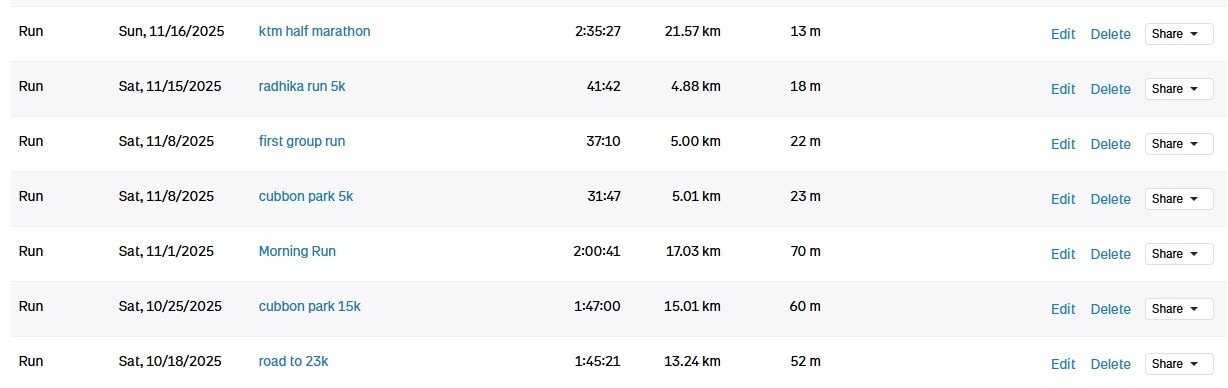
Three long runs, adding roughly 2km each week, then a genuine taper: two easy 5ks in the fortnight before. I'd been running once a week for about two months before that block started.
I'd point at the taper rather than the long runs as the reason it worked. Going into race week rested mattered more than any single 17k.
Be honest with yourself about the ramp, though. Adding 2km a week off a once-a-week base is aggressive, and it worked for me rather than being something I'd recommend copying exactly. If you have longer, take longer.
There's also a variable I can't separate out. I'd been strength training for about three years before any of this. I genuinely don't know whether I picked running up quickly or not — but I don't think that base was incidental. Legs that have been loaded regularly for years absorb a jump in mileage better than legs that haven't, and mine had.
So if you're coming to this without that behind you, read my eight weeks as the fast end of the range rather than the normal one, and give yourself more.
Shoes and kit
I'd been running in barefoot-style shoes off Amazon, under ₹1,000. Genuinely comfortable — a wide toebox and no compression — and they left me unconvinced that expensive running shoes were solving a problem I had.
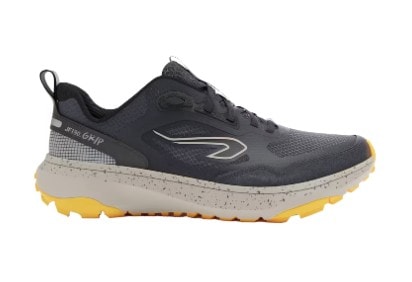
Walking into a running shop with that mindset is how you end up spending more than you planned. I went to Decathlon for their roughly ₹2,000 pair and left with the ₹3,000 trail version, on the logic that this was a "trail" race.
decathlon.in
JF 190 Grip road and trail running shoes
The ~₹3,000 pair I ran it in. Sensible money for a first trail race.
Visit →For a course this flat and this dry, road shoes would have been fine. The trail outsole was insurance I didn't especially need — but it's a reasonable amount to spend on a first race, and it beats the ₹8,000 entry point of the big brands while you're still deciding whether running is your thing.
I also picked up a running belt and a phone armband. Worth it: you don't want anything in your hands for two and a half hours.
Fuelling
Electrolytes and gels come in the race kit, so you don't have to source them yourself.
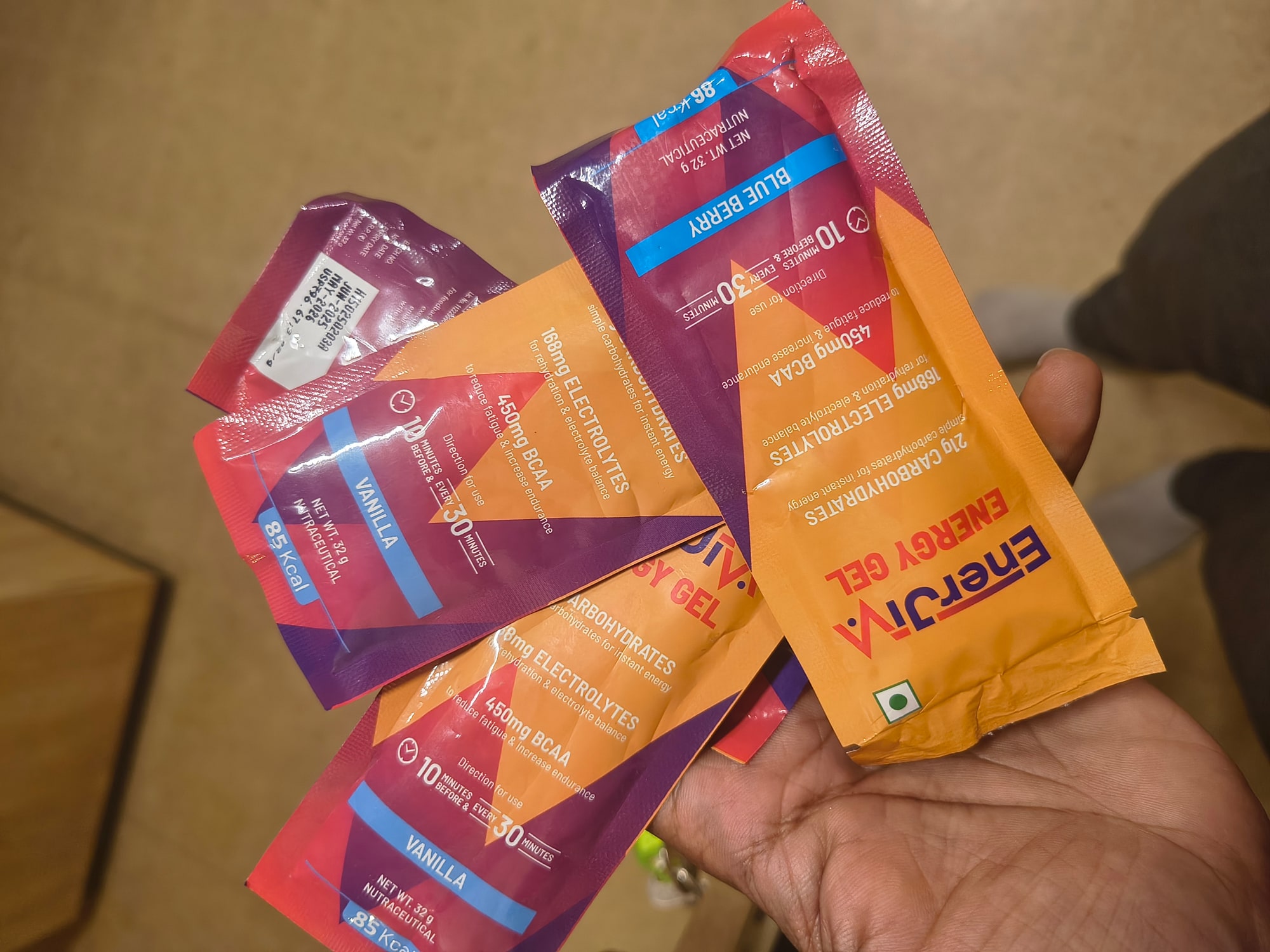
Do test them before race day. I took a couple during the run and found them sticky and unsettling on the stomach, which is a miserable thing to discover at 15km with nothing else to switch to. Whatever the kit contains, try one on a long run first.
I stopped only to drink, and never for long. That was deliberate: I was fairly sure that if I properly stopped, I wouldn't start again. Somewhere past halfway the thought that I might not finish turned up and stayed. Continuing to move slowly is a real strategy, and it's usually the right one.
Who actually runs it
The most useful thing I saw all day: the runners leading the race were significantly older than me. Sixty-ish, comfortably clear of the field.
One of them was staying at my hostel — arrived on a Himalayan, thoroughly unbothered. I said hello mid-race as he came back the other way and he was so locked in he didn't register it.
If you're worried about being out of place at a start line like this, don't be. Whatever you're picturing the field looks like, it's broader than that.
The finish, honestly
I finished in 2:35:27, a 7:12 pace, without walking.
Then my knees locked up. My calves hurt in a way I hadn't previously known was available, and I could barely walk — I stumbled around the finish area like a drunk for a while. That's normal for a first half and nothing went wrong, but plan for it: don't schedule anything for that afternoon, and have your ride home arranged in advance rather than discovering the problem while unable to walk.
Should you make this your first half?
Yes, with two caveats.
The course is as forgiving as a half marathon gets — flat, no technical footing, and a genuinely nice place to spend a morning. The field is welcoming and much more mixed in age than you'd expect.
What'll catch you out is everything around the running: the heat on an exposed trail, and the logistics of a 5am start line ninety minutes past Mysore. Sort your travel and your last-mile ride before race weekend, test your gels on a long run, and the race itself is the straightforward part.
The next running is below. Eight weeks is enough to build to it off a 10k — I know, because that's exactly what I had.